JSR Dynamics Is Now a Public Company: What It Means for an IPO, and What's New in Its Line-Up
ShareSaathi Intelligence
Head of Research
JSR Dynamics Private Limited no longer exists. Since April 30, 2026, the Khagantak glide-bomb maker has been JSR Dynamics Limited, a public limited company. That is usually an early step towards an IPO. Here is what changed, what it does and does not tell you about a listing, and what the company has shown off since.
What changed
- New name and status. JSR converted from a private to a public limited company on April 30, 2026, and received a fresh certificate of incorporation.
- New CIN. Its corporate identity number changed from U29113MH2018PTC318834 to U29113MH2018PLC318834. "PTC" marks a private company and "PLC" a public one; the "U" means the shares are still unlisted.
- Same shares. Your equity ISIN, INE0JFD01014, did not change. Nothing needs to be done with shares already in your demat account.
The new name is already in use: the October 9, 2026 Infomerics rating note calls it "JSR Dynamics Limited (Erstwhile JSR Dynamics Private Limited)", and the company's website uses JSR Dynamics Limited.
Why a company converts
There are two practical reasons, and both apply to JSR.
- A private company cannot list. Under the Companies Act, a private company must restrict share transfers and cannot invite the public to buy its shares. Converting is a precondition for an IPO.
- A private company is capped at 200 shareholders. On May 13, 2026, two weeks after the conversion, about 2.5 lakh CCPS from the 2025 funding round converted into equity shares. One research estimate puts the number of shareholders after that at around 400. A private company could not have taken on that many.
For unlisted investors, the conversion has one direct benefit: shares of a public company are freely transferable by law. A private company's articles can block or delay a transfer; a public company's cannot, in the ordinary course.
Does this mean an IPO is coming?
Not yet. As of October 27, 2026, JSR had not filed a draft red herring prospectus (DRHP) with SEBI, and there is no announced timeline, issue size or banker. Conversion is necessary for an IPO, but plenty of public limited companies stay unlisted for years.
There is also a practical hurdle. SEBI's standard route to an IPO requires an average operating profit of at least ₹15 crore over the previous three years. JSR has had no revenue from operations in FY2024, FY2025 or FY2026, so it is unlikely to qualify that way. Loss-making and pre-revenue companies can still list through the alternative route, but then at least 75% of the issue must go to qualified institutional buyers. Several new-age companies have used that route, so it is not a barrier, but it does mean big institutions would need to back the valuation.
If an IPO does come, shares you buy in the unlisted market today would normally be locked in for six months from the IPO allotment date. Our guide to lock-in rules for pre-IPO buyers explains how this works.
Signals to watch for: a DRHP filing on SEBI's website; the appointment of merchant bankers; a bonus issue or share split to bring the per-share price down (common before listings); or the board adding independent directors.
What's new in the product line-up
In interviews and posts between October 12 and 14, 2026, JSR showed more of what it has been building beyond the Khagantak. All of the following are company claims about weapons still in development, not tested specifications.
A guided rocket for ground and air launch. JSR showed an airframe for a guided rocket designed to be fired from both ground launchers and aircraft. Founder Air Marshal Shirish Deo (Retd), a former Vice Chief of the Indian Air Force, said the approach would give the customer 12 rockets for the price of one imported equivalent. The company has not stated a range for this design; a separate 324 mm guided rocket has an expected range of 250 to 300 km.
A jet-powered loitering munition. A turbojet-powered drone that circles over a target area before striking. JSR's published figures: up to Mach 0.8, a 290 km range, 40 minutes of endurance and a 27 kg blast-fragmentation warhead, with satellite and inertial navigation and infrared or optical terminal guidance. The company has also mentioned a strike drone with about 1,000 km range; it is unclear whether that is the same weapon.
Decoys and the Navy. The founder has said the Air Force has contracted its miniature ground-launched decoy (MGLD), a small drone that mimics an aircraft to confuse enemy air defences, and a naval variant has been reported. No contract value has been disclosed.
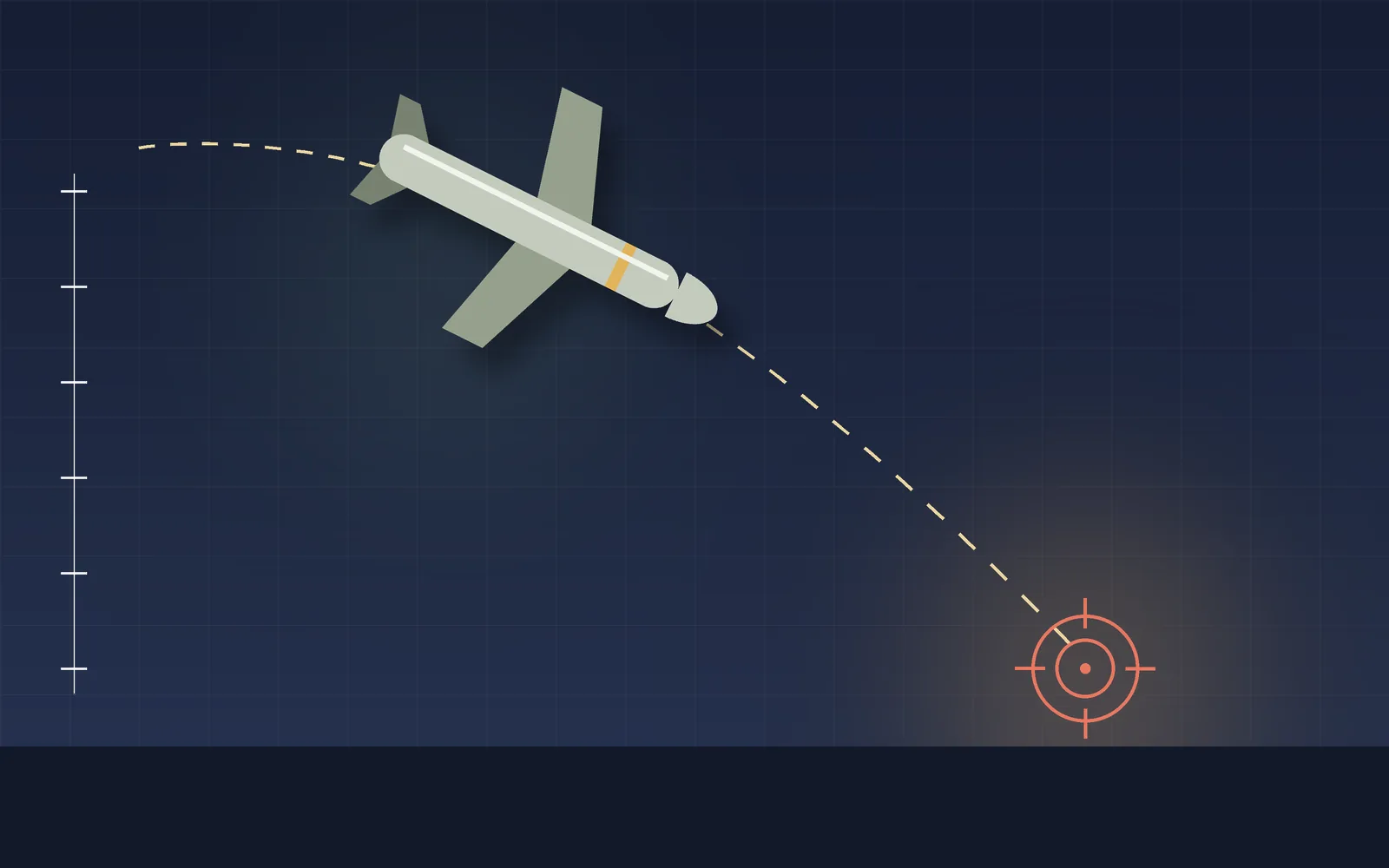
And the Khagantak itself. The IAF said on September 2 that the Khagantak-243 had cleared a drop trial with all objectives met. The company's own website goes further, claiming accuracy 36% better than required and range 80% more than specified. The IAF has not published those figures. In an October 12 interview, the founder called it "the longest-range glide bomb in the world", while noting that some components are still imported.
Funding and capacity
- Boundless Capital took a minority stake in JSR, reported in January 2026. The amount and valuation were not disclosed.
- The same reports describe a newly commissioned plant at Yelahanka, Bengaluru, in addition to the Butibori factory near Nagpur. The money was earmarked for manufacturing capacity and new products.
- Bank facilities were raised to ₹106.59 crore, including ₹60 crore of bank guarantees, under the October 2026 Infomerics rating.
What it all adds up to
The conversion to a public company, the CCPS turning into equity, a larger bank line and a widening product catalogue all point the same way: JSR is preparing to be a bigger, more widely owned company. What is still missing is revenue. FY2026 accounts showed none for the third year running (see the FY26 numbers), and the product news above is about future weapons, not delivered orders.
For an unlisted buyer at ₹12,250, that means two things. The paperwork for an eventual listing is moving. But the IPO itself, and the valuation institutions would pay, will depend on Khagantak deliveries showing up in the accounts first. Treat JSR as a multi-year holding, not a listing trade.
The live price and lot size are on the JSR Dynamics share page. If you are comparing valuations, note that JSR's equity at ₹12,250 is worth about ₹2,760 crore, not the ₹7,665 crore shown on many sites; here's why.
Disclaimer: This article is for information and education only and is not investment advice. The conversion date and CIN change are from MCA records as cited in a Priveq research note (October 2026) and are consistent with the Infomerics rating note of October 9, 2026. Product claims are the company's, from its website and from interviews reported by BharatShakti and idrw (October 12–14, 2026), and have not been independently verified. SEBI eligibility rules are summarised in general terms. Unlisted shares are illiquid, prices are indicative dealer quotes, and a listing is never guaranteed. Data as of October 27, 2026. Please consult a SEBI-registered investment adviser before investing.
Related Investment Opportunities
Related Market Intelligence
Invest in the Source
Our analysts track these companies 24/7. Don't just read the news—own the upside.
View Live Listings