₹97 and a Rate Hike: Why the Smart Money Is Looking Off the Ticker
ShareSaathi Intelligence
Head of Research
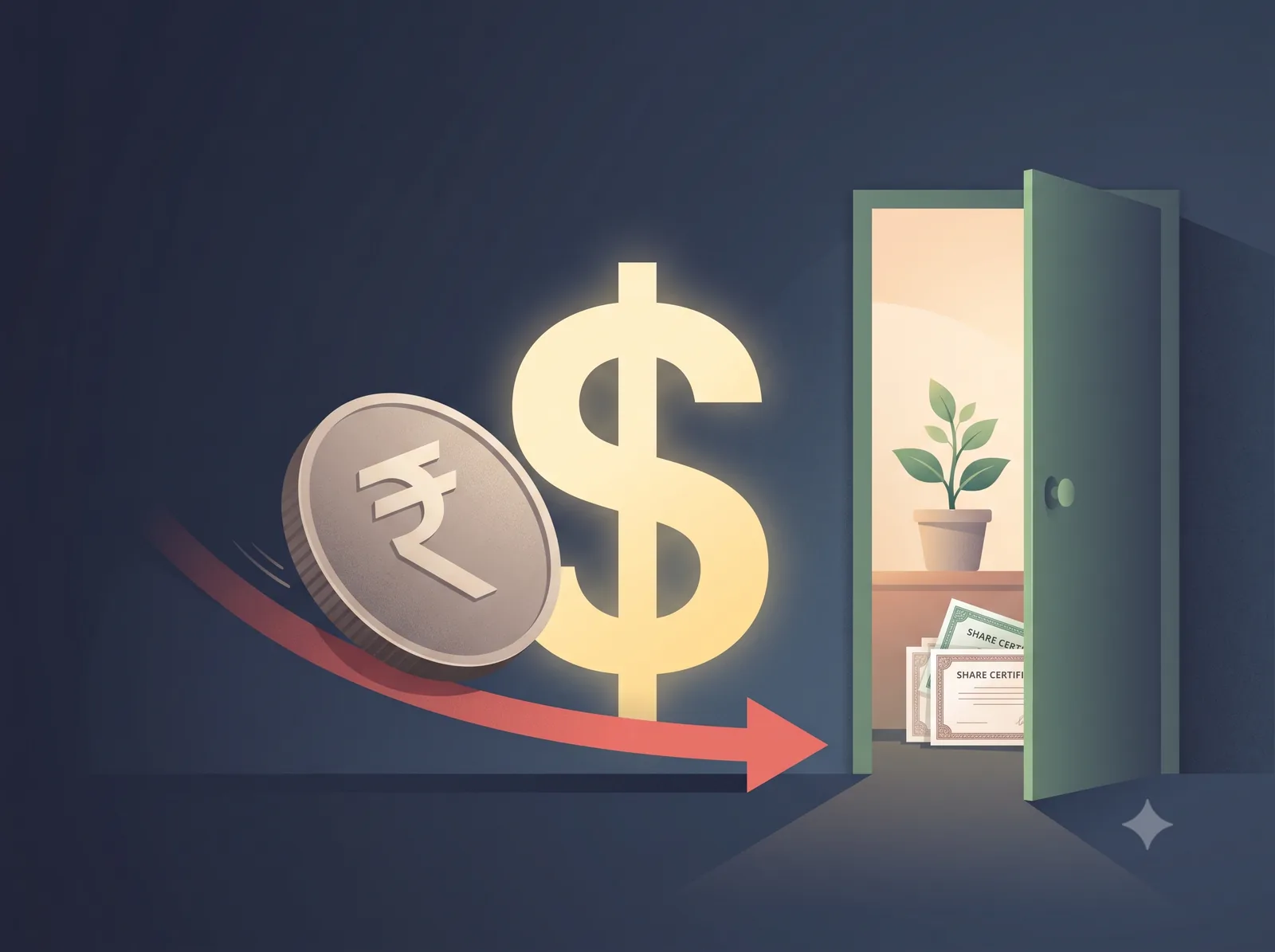
The rupee is falling. Here's what it means for your unlisted shares.
On October 7, 2026 the rupee slid to 97.15 against the US dollar, its weakest level since May 20, on the same day the RBI raised its repo rate for the first time since February 2023. For listed-market investors, that is a day of red screens. For investors in unlisted and pre-IPO shares, it is a reset of the maths: valuations, IPO timelines and sector winners all shift.
What happened on October 7
The RBI turned hawkish and the rupee still fell. Here is the day at a glance.
| Indicator | Level on Oct 7, 2026 | Change |
|---|---|---|
| USD/INR (intraday low) | 97.15 | Weakest since May 20, 2026; previous close 96.39 |
| RBI repo rate | 5.50% | +25 bps from 5.25%; first hike since February 2023 |
| RBI policy stance | Calibrated tightening | Moved from neutral |
| Benchmark bond yield | 7.25% | 52-week high |
| US dollar index | 102.07 | +0.24% from 101.83 |
The RBI's reason is inflation, which has stayed above its comfort zone for months. Governor Sanjay Malhotra also said the central bank will let the rupee find its correct value while keeping the move orderly. In plain words: the RBI will smooth the fall, not stop it.
Higher rates normally support a currency, because they make Indian assets pay more to foreign investors. That the rupee weakened anyway tells you how strong the global pull towards the dollar is right now.
Why the rupee keeps sliding
The rupee has lost more than 4% against the dollar in six months, and the fall is speeding up: 1.7% over three months, then 2.2% in the last month alone.
- Flight to safety. The conflict in West Asia has kept global investors on edge. When risk rises, money leaves emerging markets like India and parks in the US dollar.
- Strong dollar demand. The dollar index is firm at about 102, so the rupee is fighting a global tide, not just a local problem.
- Imported inflation. A weaker rupee makes oil, electronics and other imports dearer. That feeds the inflation the RBI is now hiking to contain, which is why the rate move and the currency move are one story.
Foreign portfolio investors (FPIs) move listed stocks every day. When they sell, Nifty and Sensex feel it within hours. Unlisted shares sit largely outside that daily flow, which changes how they react, for better and for worse.
How this reaches unlisted share prices
Unlisted shares don't flash on a ticker, but they are priced off the same economy. Rate hikes and a weak rupee reach them through four channels.
1. Higher rates lower what future profits are worth. Most unlisted companies are valued on growth that is years away. When the risk-free rate rises, those future rupees are discounted harder. A simple illustration: a business valued at ₹1,667 crore using a 12% required return and 6% growth drops to about ₹1,600 crore if the required return rises just 0.25 points to 12.25%. That is a 4% markdown from one quarter-point hike, before anything changes in the business itself.
2. The IPO window narrows. Most unlisted investors are buying a future listing. When FPIs sell and listed markets wobble, bankers and promoters push IPOs back to wait for a better price. A delayed IPO means your money stays locked up longer.
3. Prices move slower, which cuts both ways. Unlisted prices are discovered through dealers and negotiated trades, not a live order book driven by foreign flows. They don't crash in a day the way listed stocks can. But they don't bounce in a day either, and when buyers step back, spreads widen.
4. Listed peers set the reference price. Dealers watch how comparable listed companies trade. If listed peers re-rate lower on rate fears, unlisted quotes usually follow with a lag of weeks, not hours. That lag is either a warning or an opportunity, depending on which side you're on.
The net effect: a tightening cycle tends to compress unlisted valuations and stretch holding periods, while creating entry points for patient buyers.
Winners and losers in the unlisted universe
Ask two questions of any company you hold: does it earn in dollars, and does it run on borrowed money?
| Unlisted segment | Rupee at 97 | Rates at 5.50% | Net read |
|---|---|---|---|
| IT services, SaaS and export-led firms | Helps: dollar revenue converts into more rupees | Mild | Tailwind |
| Pharma and specialty chemical exporters | Helps on exports; hurts if raw materials are imported | Mild | Mixed to positive |
| Exchanges, depositories and market infrastructure | Little direct effect | Mild; volatility can lift trading volumes | Resilient |
| Banks and NBFCs | Little direct effect | Lending rates rise, but so do funding costs | Selective |
| Consumer tech and loss-making startups | Hurts if they pay for cloud, ads or imports in dollars | Hurts: harder discounting, costlier funding | Headwind |
| Electronics, auto parts and import-heavy manufacturers | Hurts: input costs rise | Hurts if debt-funded | Headwind |
| Firms with foreign-currency loans | Hurts: repayment costs rise in rupees | Hurts | Strong headwind |
Companies that are already profitable and close to filing can still list in a choppy market, because public investors pay up for certainty. Companies that need a hot market to justify their valuation are the ones most likely to delay, and their unlisted prices are the most likely to soften.
A playbook for unlisted investors right now
- Favour dollar earners and profitable businesses. They hold value when discount rates rise. Be choosy with cash-burning names priced on next year's IPO.
- Plan for a longer hold. Assume any IPO you're betting on could slip by 6 to 12 months. Invest only money you won't need in that time.
- Buy in tranches. Unlisted prices adjust with a lag. Splitting a purchase across a few weeks lets you average into any markdown.
- Check the listed peers. If peers are down since the rate hike and the unlisted quote hasn't moved, negotiate or wait. Compare today's quotes on the unlisted share price list.
- Read the balance sheet for dollar debt. Foreign-currency loans get more expensive every time the rupee falls.
- Keep a paper trail for every payment. Pay only to ShareSaathi's official bank account, never to an individual. Keep your UTR (the bank reference number) and a screenshot of the payment, and share them with us so the team can verify your payment quickly and move your order forward.
A longer hold also changes your tax. Unlisted shares generally need 24 months to count as long-term, against 12 months for listed shares. Check the current rules with your tax adviser before you plan an exit.
The bottom line
A rupee at 97 and a repo rate at 5.50% mark the start of a tougher phase, not a crisis. Listed markets will feel it first and loudest, through FPI selling. Unlisted markets will feel it slower and quieter, through softer quotes and delayed IPOs.
That lag is the opportunity. Investors who back dollar-earning, profitable companies, buy in stages and are ready to hold through a delayed listing can use this cycle to enter good businesses at better prices. The rupee may be falling. Your plan doesn't have to.
Disclaimer: This article is for information and education only and is not investment advice. Unlisted shares are illiquid, prices are indicative and a listing is never guaranteed. Market data is as reported on October 7, 2026. Please consult a SEBI-registered investment adviser before investing.
Related Market Intelligence

Invest in the Source
Our analysts track these companies 24/7. Don't just read the news—own the upside.
View Live Listings